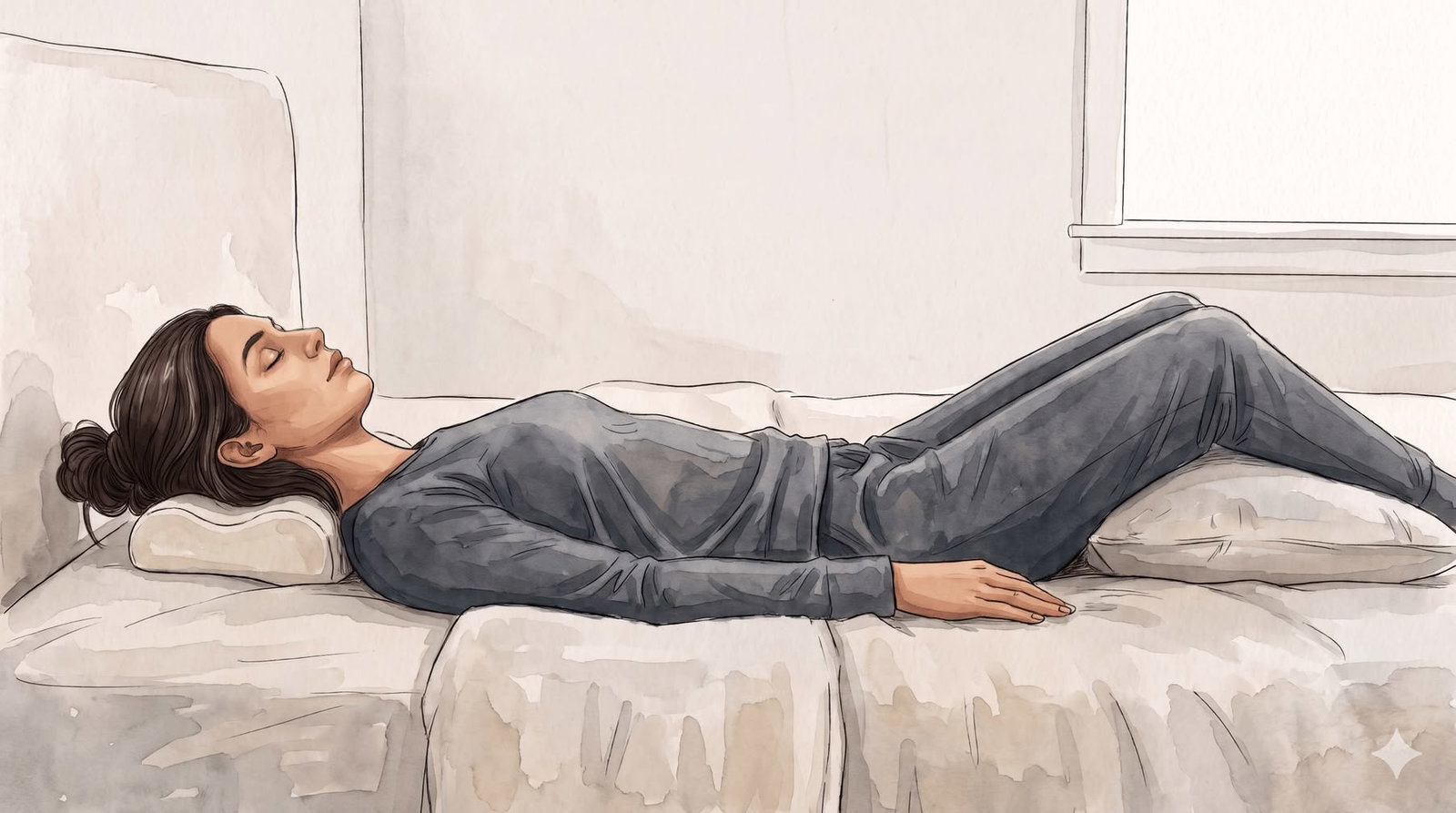
Good sleep helps your spine heal. Most people sleep best on their back with a pillow under the knees, or on their side with a pillow between the knees. A few simple habits protect your spine when you lie down, turn and get up.
Reviewed by Dr. Kshitij Chaudhary, Last reviewed November 2026
At our spine clinic at P.D. Hinduja Hospital, Mahim, Mumbai, patients often ask how to sleep after surgery. This page shows the positions that protect your spine, how to turn in bed and how to set up your bed. If your surgeon gave you different instructions, follow those first.
What is the best sleeping position after spine surgery?
Keep your spine in a straight, relaxed line. Two positions do this well:
- On your back: Use one supportive pillow under your head and neck, not a stack. Place a pillow under your knees. This eases the curve of your lower back and takes pressure off the surgical area.
- On your side: Bend your hips and knees slightly. Place a firm pillow between your knees and thighs so your top leg cannot slide forward and twist your lower back. If your waist sags towards the mattress, tuck a small rolled towel under it.


Choose whichever feels more comfortable. You can switch between the two during the night.
Keep your head level with your body. Pick a pillow height that does not push your chin towards your chest. A small rolled hand towel inside the bottom edge of the pillowcase can support the curve of your neck.
Which positions should I avoid?
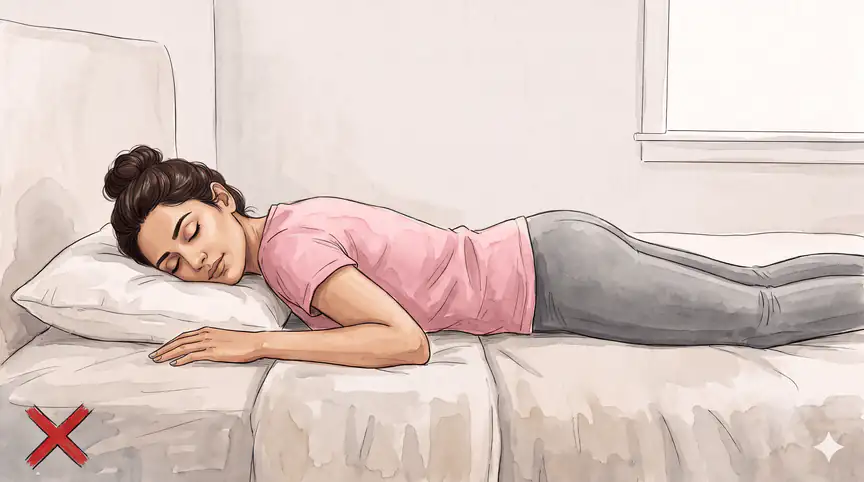
- Sleeping on your stomach. It arches your lower back, twists your neck and strains the healing bone and wound.
- Any position that twists your shoulders one way and your hips the other.
How do I turn over in bed?
Use the log roll. Move your shoulders, hips and knees together, like one log.
- Lie on your back with your knees bent.
- Keep your knees together and tighten your tummy gently.
- Roll your shoulders, hips and knees onto your side at the same moment.
Do not reach across your body or twist to turn.
How do I get in and out of bed?
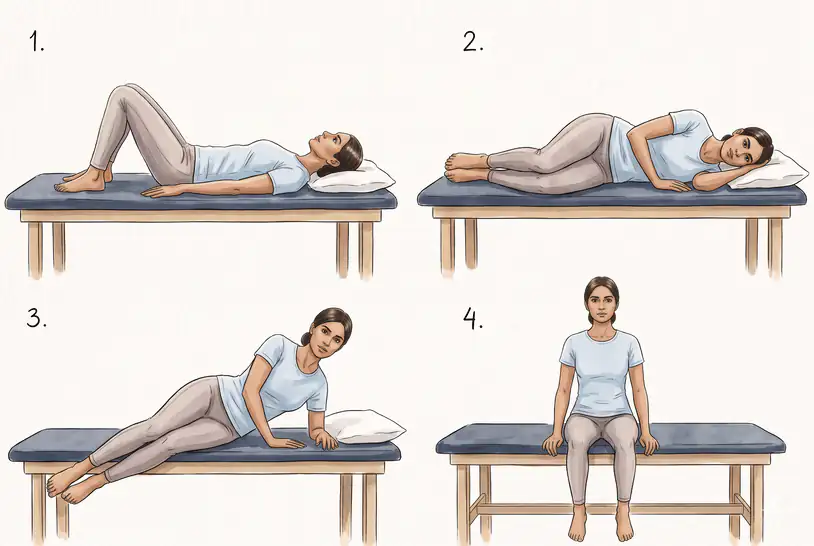
Getting in
- Sit on the edge of the bed.
- Lower your upper body sideways onto the mattress, using your arms.
- Bring your legs up together as you lie down.
Getting out
- Log roll onto your side, near the edge.
- Swing your legs off the bed while you push up with your arms.
- Sit for a moment, then stand by pushing up with your legs. Keep your back straight.
How should I set up my bed?
- Mattress: Choose one that is supportive and medium-firm. Avoid a soft mattress that lets your back sag.
- Pain medicines: Take them as your team prescribed, at bedtime, so pain does not wake you.
- Daytime rest: Take short rests in your supported position, between short walks. This keeps your muscles from stiffening.
Other resources
For easy ways to move around the house, see Everyday Body Mechanics: Move Well and Protect Your Spine. For more on pillows and mattresses, read Sleeping positions and mattresses and The rolled towel trick for morning back stiffness. Your rehab plan comes first if you have one: lumbar discectomy, lumbar decompression or lumbar fusion.
This page is for general information and does not replace a medical consultation. Please see a doctor for advice about your own symptoms.
About Dr. Kshitij Chaudhary

This page was written by Dr. Kshitij Chaudhary, a fellowship-trained spine surgeon at P.D. Hinduja Hospital, Mumbai, trained in complex spine surgery at Harvard Medical School (Beth Israel Deaconess) and the Twin Cities Spine Center, Minneapolis. About Dr. Chaudhary
Book an Appointment
Call or WhatsApp → 8291420004 (9am–5pm)
Request an appointment online →
Alternate: 02269248173 · Book via Hinduja · More ways to reach us →
Get a Second Opinion on Your MRI
Been advised spine surgery, or unsure about your diagnosis? Send your MRI and reports for a full review with Dr. Chaudhary by teleconsultation.